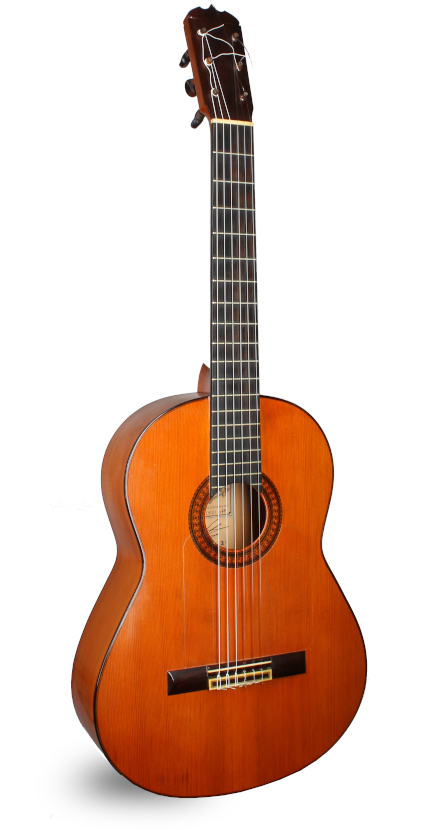
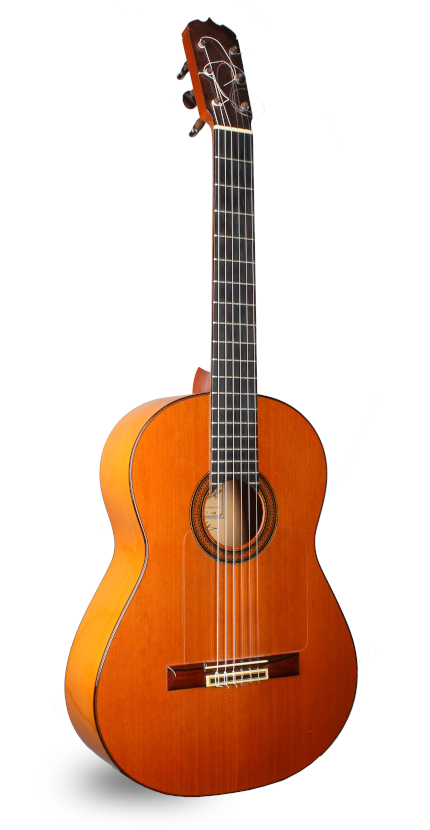
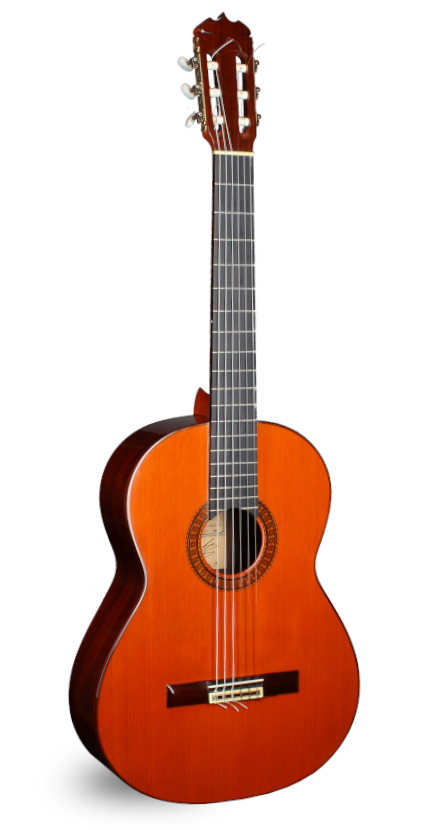
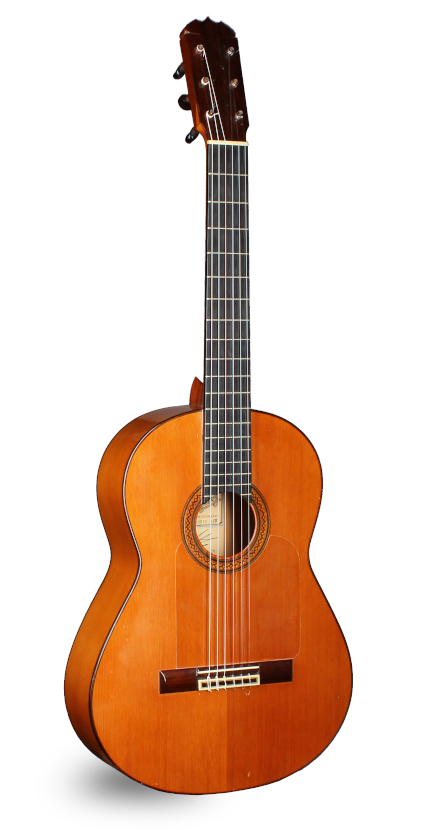
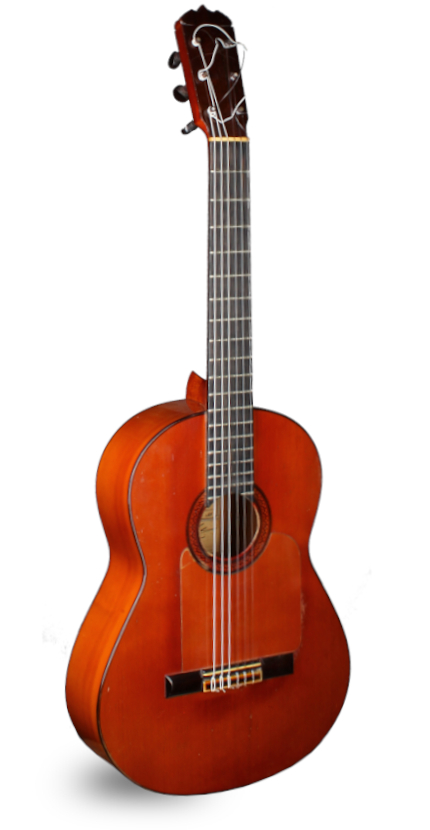
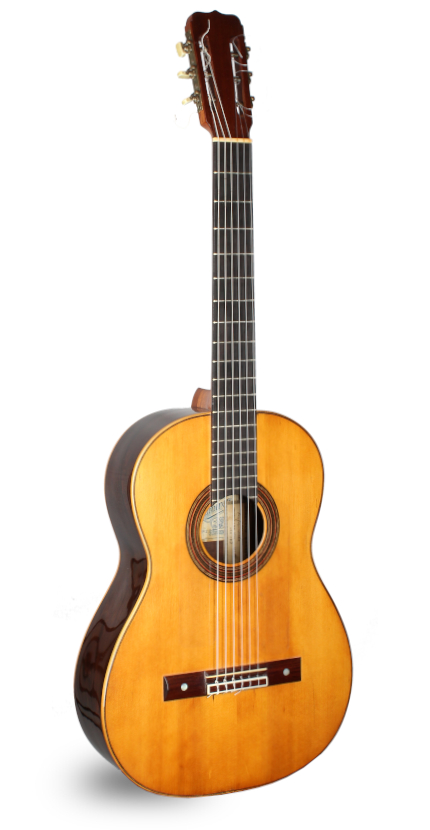
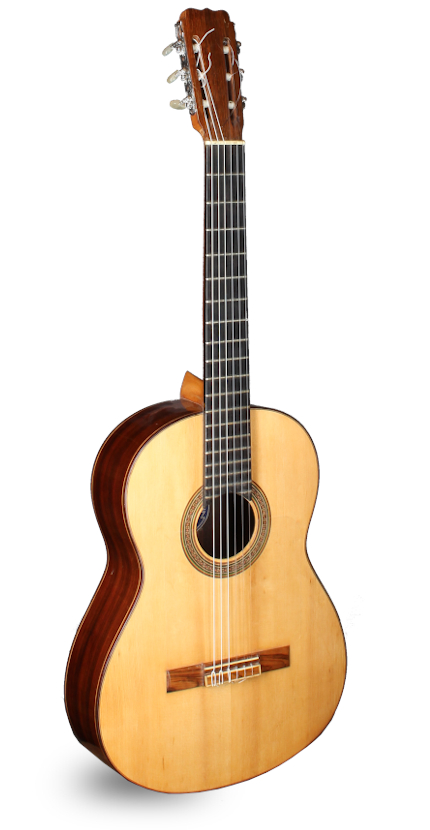
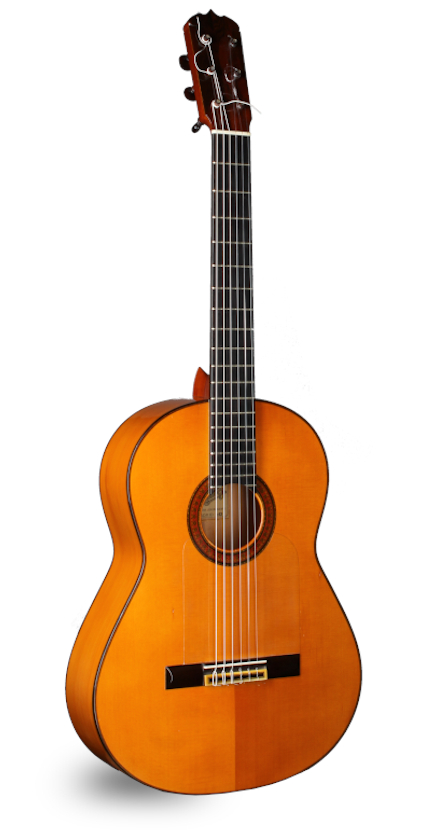
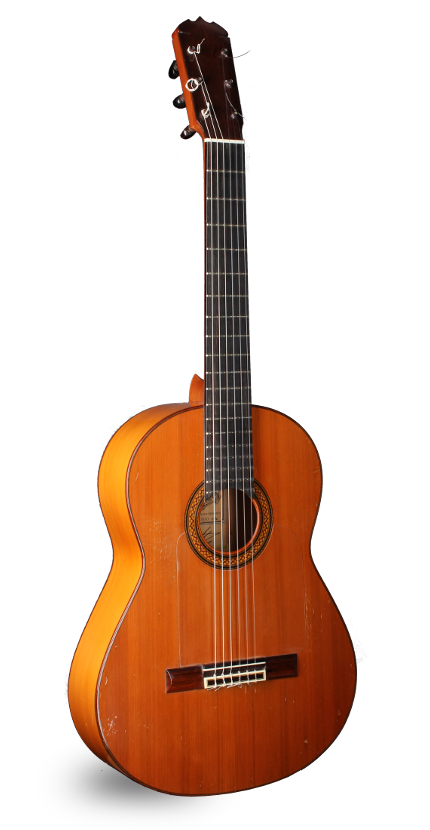
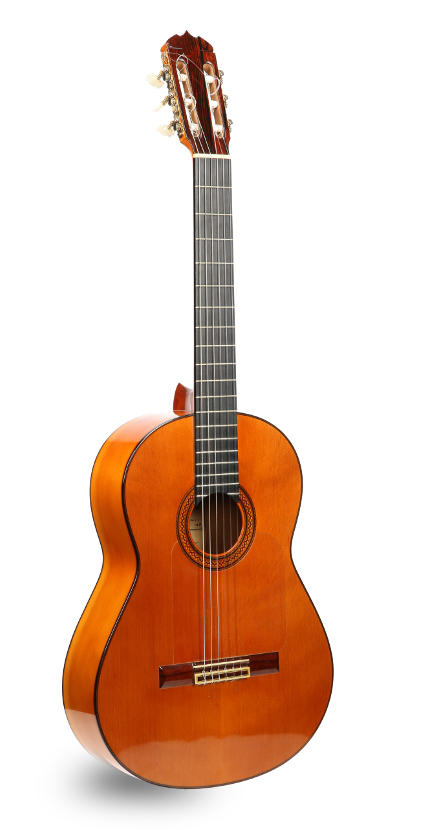
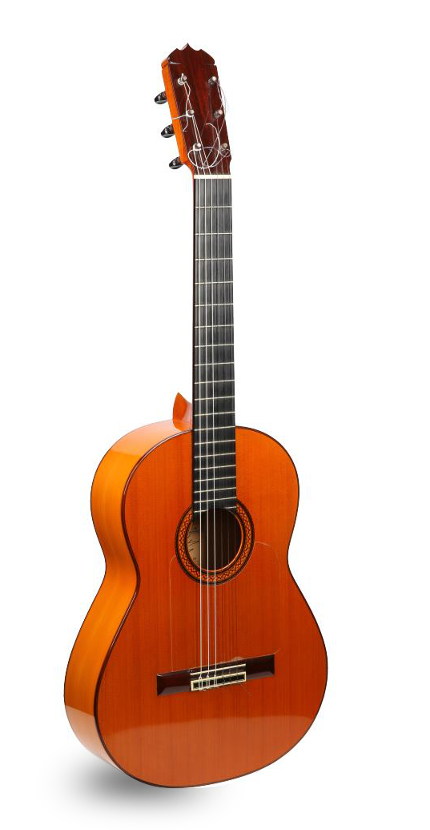
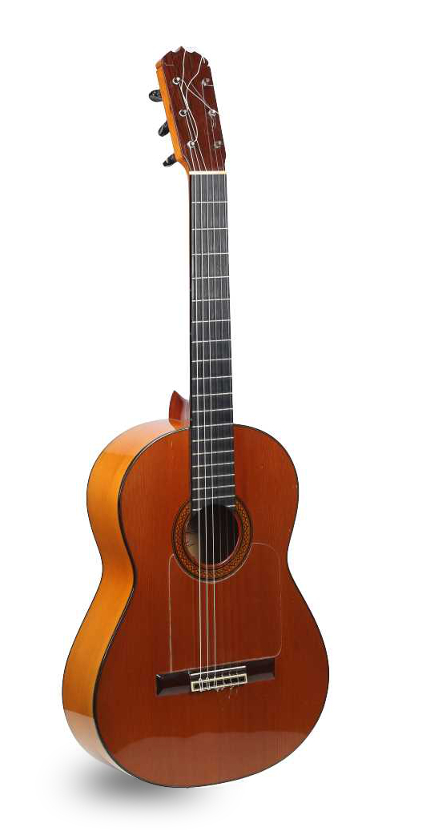
José Ramírez is one of the most prestigious firms in the world of guitar, for his workshop have been guitarists from all over the world, both classical and flamenco, throughout his history: Paco de Lucia, Manolo Sanlúcar, Narciso Yapes, Serranito … among many others.
Discover the story of one of the most renowned names in the history of Spanish guitar making: its history, key figures, the initials on its guitars… everything!
José Ramírez I, born in Madrid in 1858, was the founder of the Ramírez dynasty. He began his training as an apprentice at the age of 12 in the workshop of Francisco González, one of the most important guitar makers on Carrera de San Jerónimo. In the early 1880s, he became independent and established his own workshop in El Rastro, Madrid, later moving in 1890 to Concepción Jerónima Street, where the family continued the business for more than a century.
Ramírez I was not only a distinguished builder, but also an important master of the Madrid School. He trained key figures such as his brother Manuel Ramírez, his son José Ramírez II, and numerous craftsmen who later developed their own careers, including Enrique García and Alfonso Benito. His influence established him as one of the central figures of 19th-century Spanish guitar making, following in the footsteps of Antonio de Torres.
Faced with the limited volume of guitars at the time, especially in settings such as café cantantes and the early flamenco tablaos, he developed the so-called “Tablao Guitar”, a model designed to improve sound projection. This design would become fundamental for the later evolution of the flamenco guitar, as his brother Manuel used it as a basis and transformed it into new templates that helped establish the modern instrument.
His legacy was so influential that even guitars associated with great performers such as Agustín Barrios shared this same “Tablao Guitar” template, demonstrating the historical importance of his design and its impact on the evolution of the Spanish guitar.
Manuel Ramírez de Galarreta y Planell was born in 1864 in Alhama de Aragón, although he grew up mainly in Madrid. He learned the craft of guitar making from his older brother, José Ramírez I, and at the age of 27 he decided to become independent in 1891.
He initially planned to settle in Paris with his brother’s support, but ultimately opened his own workshop on Cava Baja Street in Madrid. This decision led to strong tensions between the two brothers, the exact cause of which was never clarified during their lifetime.
Manuel was appointed luthier to the Royal Conservatory of Madrid and continued the legacy begun by José I, training some of the most important guitar makers in history, including Santos Hernández, Domingo Esteso, and Modesto Borreguero (from whom we have a guitar in stock, CLICK TO VIEW), who would become key figures in Spanish guitar making.
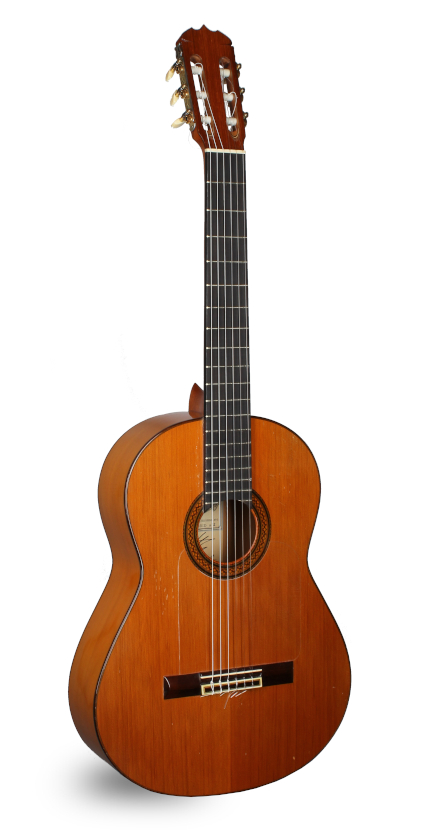
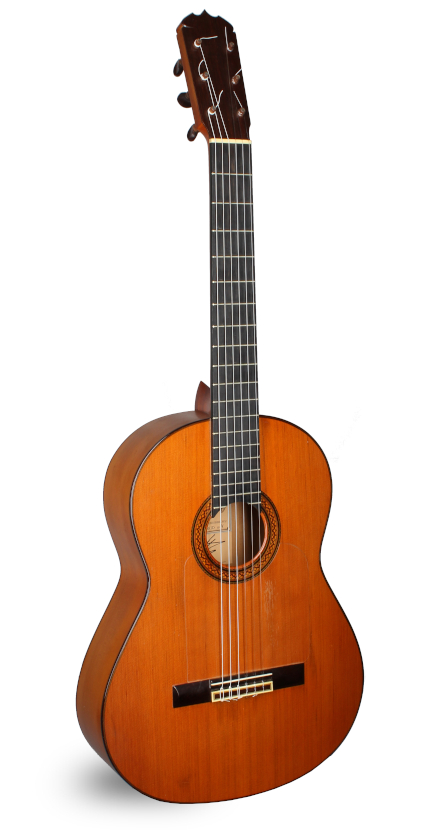
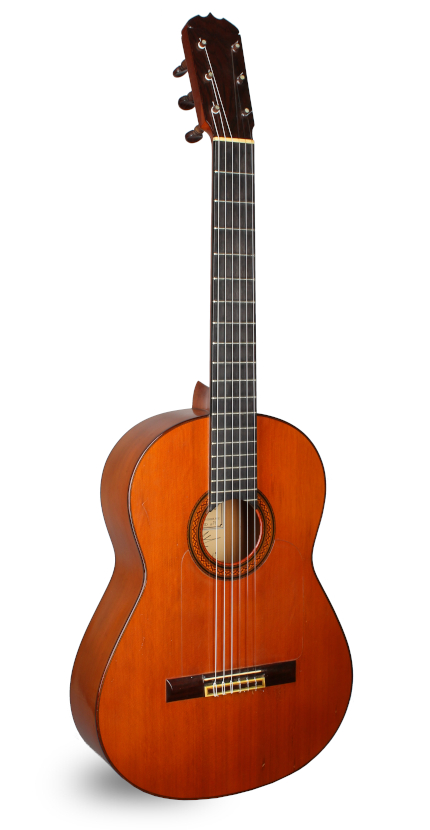
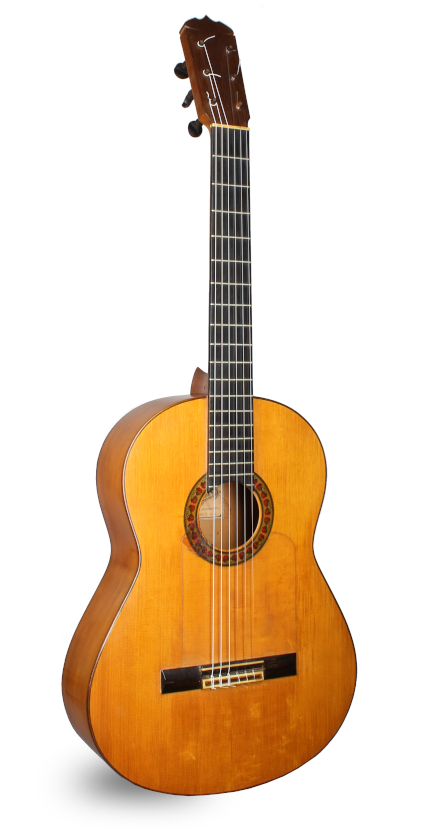
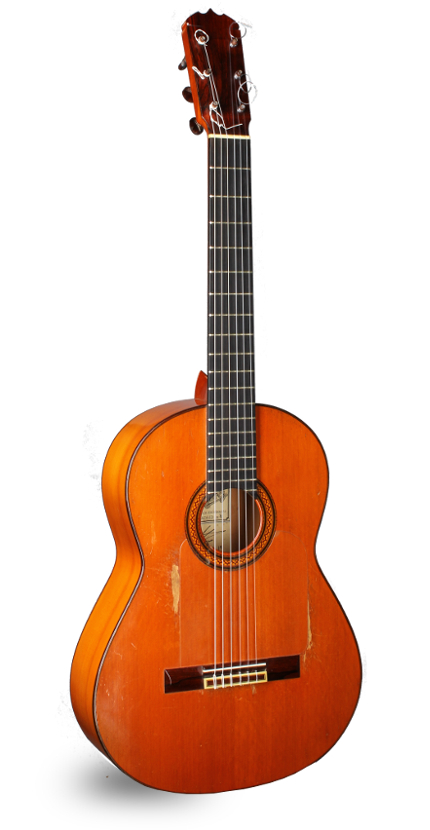
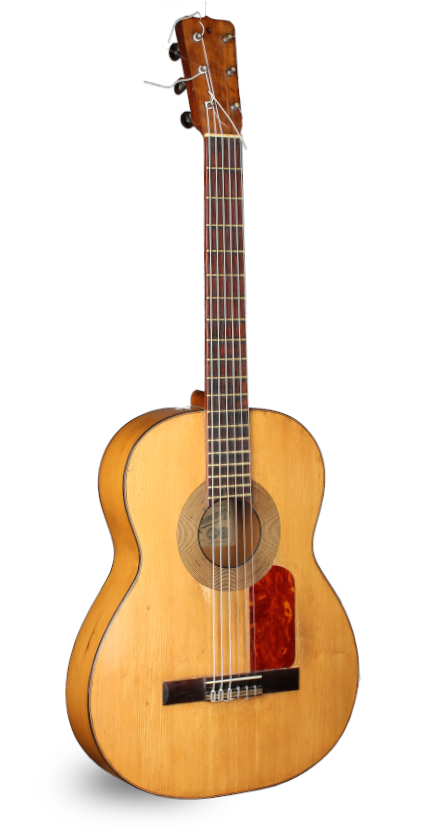
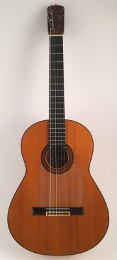
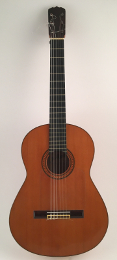
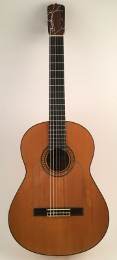
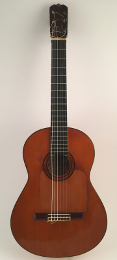
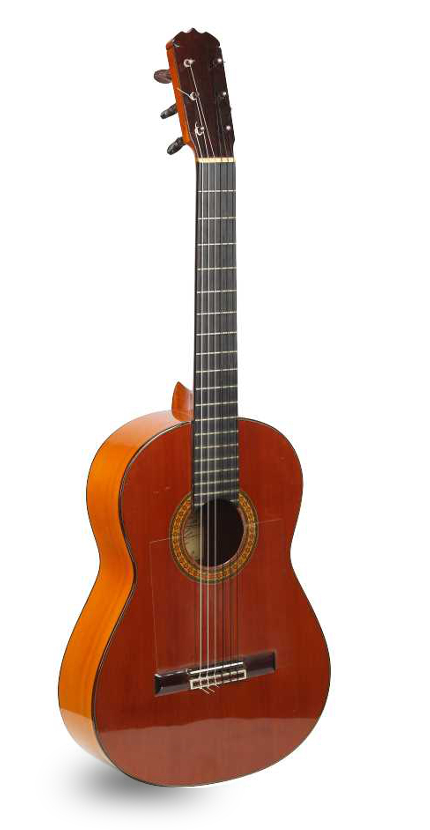
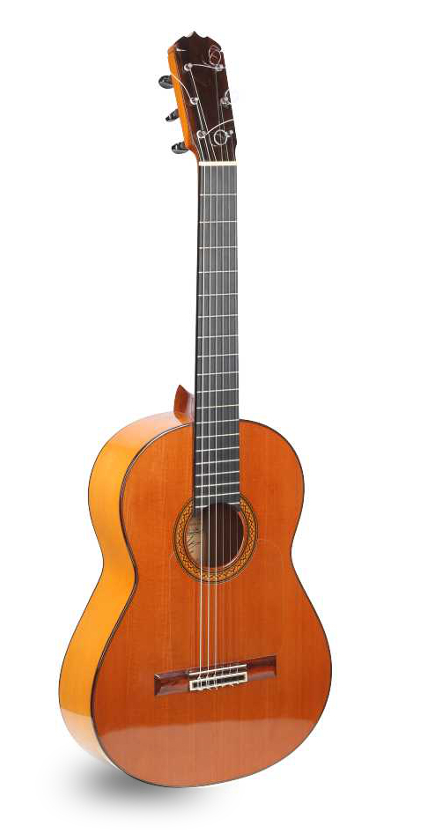
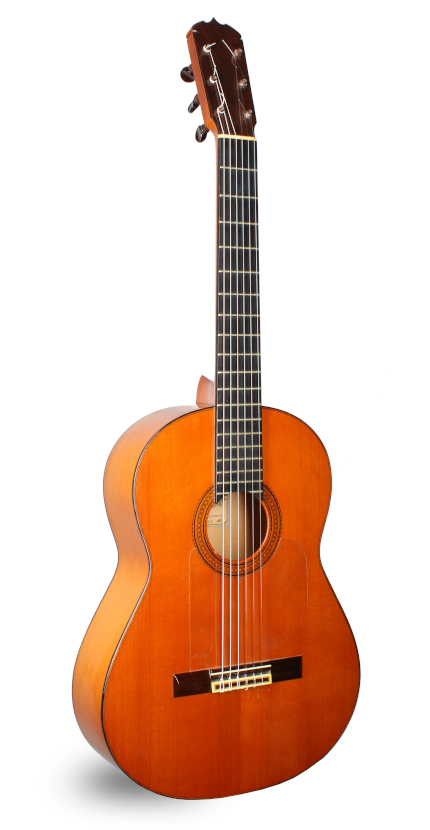
Although he initially built the “Tablao Guitar” design created by his brother, over time he developed his own template, which became one of the fundamental models of the modern flamenco guitar and was later continued by his disciples. Below you can see one of the “Tablao Guitars” currently available on our website.
Around 1912, he was involved in a well-known anecdote when a young, unknown guitarist visited his workshop and tried one of his guitars. It was Andrés Segovia, to whom Manuel gifted the instrument on the condition that he would take it around the world. That guitar, later repaired by Santos Hernández, is now preserved at the Metropolitan Museum of Art in New York.
José Simón Ramírez de Galarreta y Pernías, born in 1885, grew up in his father’s workshop and learned the craft of guitar making from an early age, while also developing his skills as a guitarist. At the age of 20, he was hired to undertake a two-year tour of South America, although it eventually lasted almost two decades, as after the dissolution of the group he was traveling with, he decided to settle in Buenos Aires.
During his time in Argentina, he met Blanca, with whom he started a family and had two children, José and Alfredo. In 1923, following his father’s death, he returned to Madrid and, two years later, took over the management of the family workshop on Concepción Jerónima Street.
During this period, the workshop had a well-structured organization, with master craftsmen and apprentices such as Alfonso Benito, Antonio Gómez, Marcelo Barbero, and Manuel Rodríguez “Marequi”, who was in charge of varnishing. Under his leadership, José Ramírez II consolidated the prestige of the brand and was awarded the Gold Medal at the 1923 Ibero-American Exposition in Seville.
However, this period was also marked by difficulties, especially after the Spanish Civil War, when the shortage of wood and materials severely affected production. This situation led to tensions with his son, José Ramírez III, when he began introducing innovations within the workshop.
José Ramírez III, born in 1922 in Madrid, began working in the family workshop at the age of 18, where he quickly stood out and became a master craftsman. From an early stage, he showed a strong interest in research and innovation, with the goal of developing the guitar as a concert instrument.
However, his experiments were limited by material shortages and created tensions with his father, as many of his prototypes were sold without proper tracking. Despite this, he continued his research, especially after the death of his brother Alfredo in 1954, who had been his main support.
Among his most important contributions was the introduction of red cedar for the soundboard in 1965, an innovation that was initially criticized but later adopted worldwide. He also developed new varnishes that were more advanced than traditional shellac, improving both protection and acoustic performance.
He experimented with different scale lengths, establishing the 664 mm scale as a standard due to its balance between projection and comfort, although he also promoted, together with his son José Ramírez IV, more accessible 650 mm models. He also designed innovations such as the “chamber guitar”, intended to improve sound clarity in recording environments, and developed 10-string guitars in collaboration with Narciso Yepes, as well as 8-string models with José Tomás.
His legacy is fundamental in the evolution of the modern guitar, being one of the most influential luthiers of the 20th century thanks to his innovative approach and constant pursuit of acoustic and structural improvement.
José Ramírez IV was born in Madrid in 1953 and began his training as an apprentice in the family workshop at the age of 18. In 1977, he was appointed master craftsman, consolidating his learning within the family’s artisanal tradition.
In 1979, he built a guitar that was chosen by Andrés Segovia, although the guitarist did not know the identity of the young maker at the time, as guitars were still signed under the name of the workshop master. Deeply moved, Ramírez IV gifted the instrument to Segovia, who used it in numerous concerts until the end of his career.
From the 1990s onwards, he developed and refined the models inherited from his father, clearly distinguishing between the “Traditional Model”, which preserved the classic sound of the 1960s, and the “Special Model”, created to offer a clearer, more direct sound adapted to new trends, fully established in 1992.
His contribution focused on the technical evolution of the guitar, improving comfort, stability, and structural strength, reducing issues caused by wood movement, and adapting construction to the needs of contemporary musicians.
Today, the José Ramírez guitar workshop and shop is directed by Amalia Ramírez, daughter of José Ramírez III and sister of José Ramírez IV, together with her children José Enrique and Cristina. The shop is located at Calle de la Paz nº8, while the workshop is based at Calle del General Margallo 10 in Madrid.
This is the official list of disciples of José Ramírez III. It indicates the initials they were allowed to sign their guitars with:
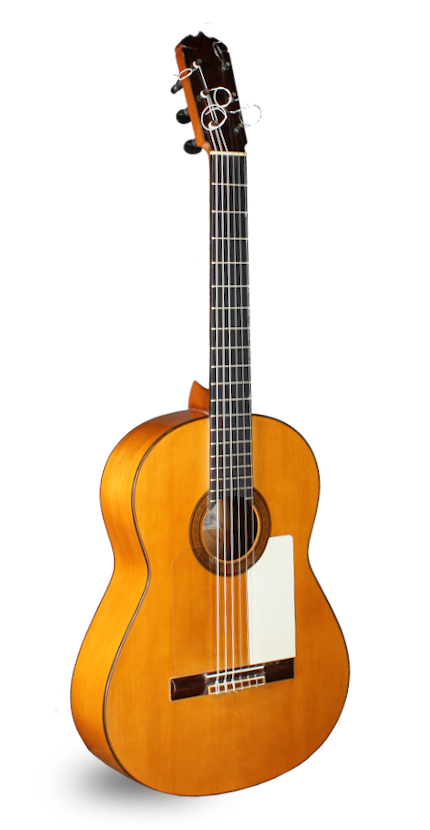
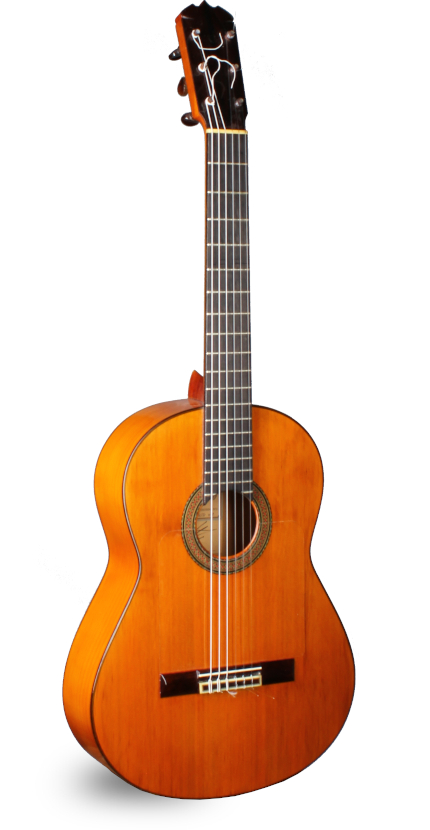
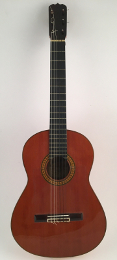
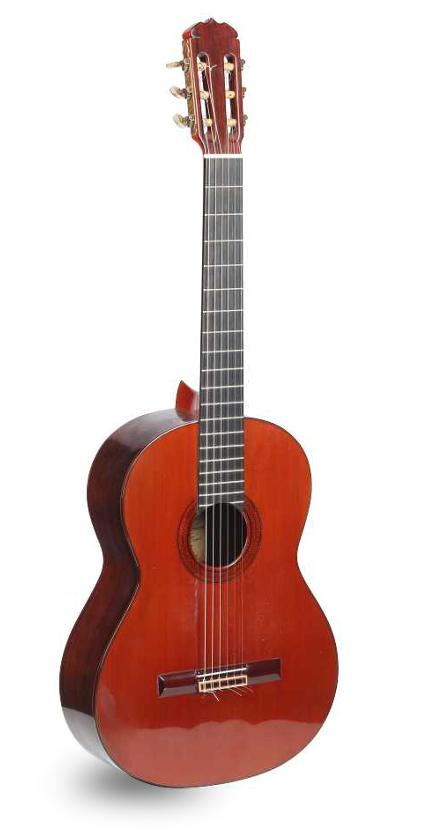
We currently have several guitars from the José Ramírez brand, among which we would like to highlight this one, built in 1968 using cedar and Brazilian rosewood. It comes with its original invoice from the period, as well as the corresponding CITES certificate for the rosewood.